Victorian manufacturer AW Bell has secured $241,589.50 in co-investment to electrify century-old wax burnout process to become the first recipient of the newly launched $10 million SME Industrial Decarbonisation Fund. Delivered by the Advanced Manufacturing Growth Centre (AMGC) in partnership with the Australian Renewable Energy Agency (ARENA) the first project, along with AW Bell’s commitment will invest a total of $486,179 to electrification.
The initiative will pioneer low-emissions technology within the Australian investment casting industry by replacing traditional gas-fired burnout ovens with an innovative electric burnout oven. Working in partnership with Australian industrial heating specialist Tetlow Kilns, AW Bell will install and validate advanced oxidation technology scaled to its commercial operations.
The 12-month project, which falls under the Fund’s focus area of ‘metals processing’, aims to reduce AW Bell’s reliance on fossil fuels and its associated greenhouse gas emissions by 40 per cent while increasing its use of electricity. Validation testing will ensure the new technology maintains the strict performance and casting quality standards required for demanding commercial applications and provides a case study for potential replication across other industrial processes including batch curing, tempering, and case hardening.
Sam Bell, Chief Executive Officer at AW Bell, said, “Many of our customers, particularly in the aerospace, defence, and medical sectors, increasingly assess suppliers based on environmental performance and emissions reduction initiatives. Our decision to electrify is far more strategic than based on decarbonisation alone, it opens further global business opportunities and will enhance the quality of our operations, provide energy resilience, and improve workplace safety.
“AW Bell is investing in leading the way for local industry with this project serving as a blueprint for numerous small-to-medium manufacturers looking to reduce direct emissions and modernise Australia’s manufacturing supply chains,” said Bell.
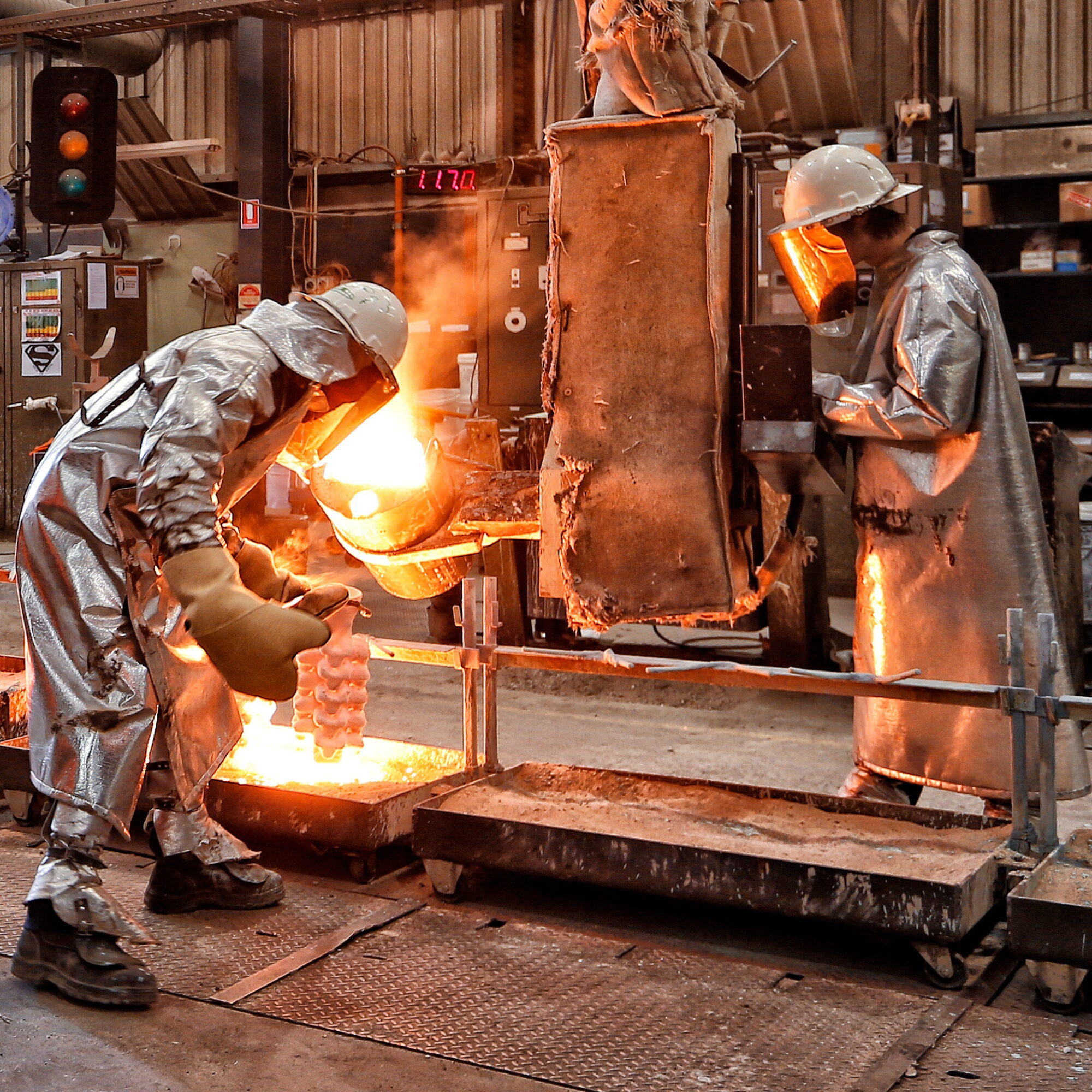
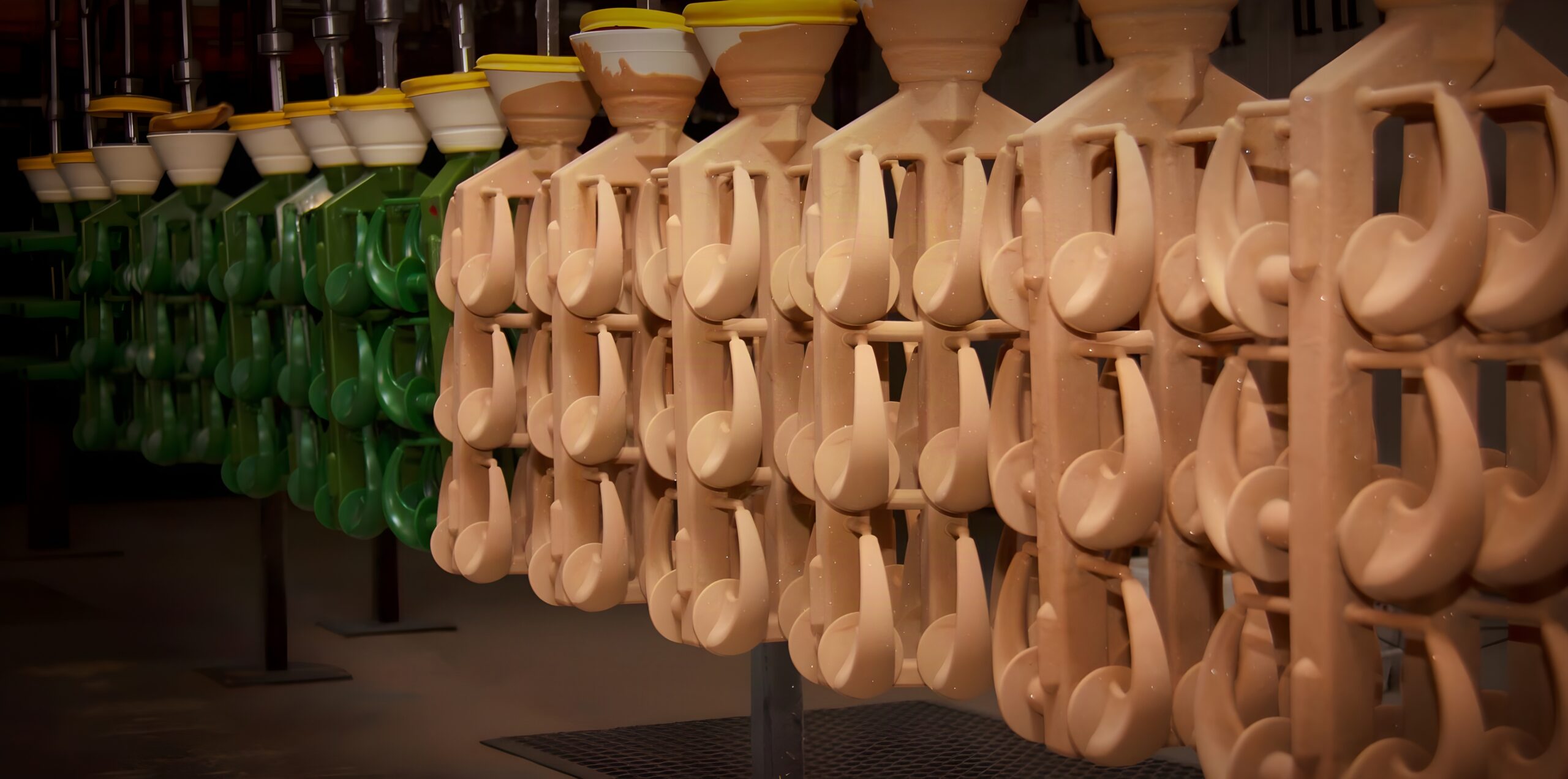
Since its founding in 1952, AW Bell has relied on natural gas-fired burnout ovens to remove residual wax from investment casting shells before metal and alloys are poured into the cast. The new oven, supplied by Tetlow Kilns, and processes are designed to achieve the temperature and combustion performance traditionally provided by gas-fired systems, demonstrating that electric technology can meet the stringent quality requirements of aerospace, defence, medical, and industrial casting applications.
ARENA Chief Executive Officer Darren Miller said: “This project is a strong example of how electrification can deliver benefits beyond emissions reduction. By replacing a gas-fired process with electric technology, AW Bell is aiming to cut its fossil fuel reliance while improving its operations and creating a model that other manufacturers can follow.
“Through our partnership with AMGC, ARENA is helping Australian manufacturers test practical solutions that can strengthen local industry and support the transition to renewable energy,” said Miller.
Beyond the initial installation, the project aims to create a pathway for broader electrification of AW Bell’s foundry operations. It will generate knowledge and operational data to support wider adoption of electric burnout technology across the investment casting industry.
Sharing that knowledge is central to helping small and medium-sized manufacturers reduce emissions and adopt technologies that can be powered by renewable electricity. Successful delivery would mark a significant step toward decarbonising investment casting and demonstrate a pathway for energy-intensive manufacturing to transition from fossil fuels to renewable energy.
AMGC Managing Director, Dr Jens Geonnemann, said: “Small-to-medium sized manufacturers are the lifeblood of Australian manufacturing. The SME Industrial Decarbonisation Fund is proving that decarbonisation can offer more than a feel-good outcome with manufacturers assessing the Fund for its ability to improve productivity, safety, and quality, while broadening business opportunities, and reducing emissions – it’s a win-win-win.”
The Fund will support manufacturers to:
- Implement electrification and other low-emissions technologies in place of existing fossil fuel processes.
- Deliver projects with clear pathways to commercial viability and measurable emissions reductions.
- Share knowledge and lessons learned to help scale successful approaches across the wider manufacturing industry.
- Build workforce capability to operate new equipment and meet certification, safety, and compliance requirements.
The Fund prioritises three areas where Australian manufacturers have decarbonisation potential:
- Surface treatment: including powder coating, galvanising and metallic finishing.
- Process steam: including sterilisation, drying and cooking.
- Metals processing: including extraction, fabrication, refinement and transformation
Eligible companies can apply for co-investment for projects valued between $400,000 and $1 million, total contribution, with lead manufacturers contributing 50 per cent of eligible project costs on a dollar-for-dollar basis. To qualify, manufacturers must currently employ fewer than 200 staff, be Australian-owned, and operate in Australia.
Applications opened July 2026 and will be assessed on a continuous basis until 31 December 2027 or until funding is fully allocated. Further details, including eligibility criteria and application guidelines are available now at www.amgc.org.au/decarbonisation-fund.
Over the past 10 years, AMGC has facilitated more than 500 national collaborations and co-funded over 170 industry projects, creating more than 4,400 jobs across the country. It has invested over $137 million of combined industry and Government funding into manufacturing projects, generating an estimated $1.72 billion in additional national revenue.